
Introduction: The Challenge of Embedded AI
Artificial intelligence is no longer confined to data centers. Today, sensors and micro‑processors integrated into robots, drones, or IoT devices must make real‑time decisions without a constant internet connection. This phenomenon is known as edge AI. It forces us to rethink digital stability and algorithmic efficiency to avoid crashes and guarantee reliable performance.
The Rise of Autonomous Systems
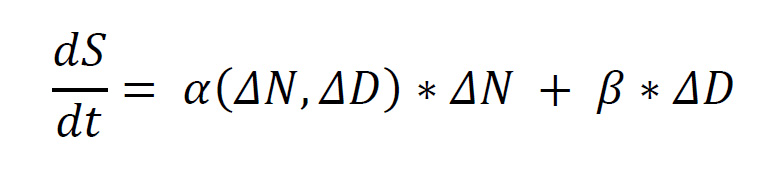
Mobile autonomous robots (AMR) are at the forefront of this revolution. Operating in complex environments, they must manage an ever‑growing number of possible trajectories while remaining responsive to rapid changes. Recent research shows that phase stability—based on two dynamic parameters—is crucial for maintaining their performance.
Phase Stability: A Dynamic Approach
This technique allows controllers to be adjusted in real time, reducing the risk of divergence or oscillatory behavior. It relies on sophisticated mathematical models that integrate both the robot’s physics and environmental constraints.

Limitations of Traditional Mathematics
Classic algorithms, designed for linear or quasi‑linear systems, quickly run into the complexities of edge AI. Models now have to handle nonlinear, noisy, and sometimes incomplete data while respecting energy and time constraints.
New Mathematical Approaches for Embodied AI
To meet these demands, researchers are developing theoretical frameworks that combine convex optimization, robust control theory, and deep learning. These methods provide better uncertainty management and greater resilience to disturbances.
- Real‑time constrained optimization
- Adaptive control based on online learning
- Probabilistic modeling of sensor errors
Online Learning: A Key Lever
Continuous learning lets systems adjust their parameters without human intervention, ensuring optimal performance even in unforeseen scenarios.
Impact on Industry and Society
The mathematical advances in edge AI open new horizons for manufacturing, logistics, healthcare, and transportation. Robots can now operate autonomously across diverse environments, reducing costs and risks.
“The convergence between embedded AI and advanced mathematics is the key to reliable and secure robotics,” declares Dr. L. Nguyen, an expert in intelligent control.
Conclusion: Toward a New Era of Embodied AI
Integrating new mathematics into edge AI is no longer optional—it’s essential for ensuring the stability and efficiency of autonomous systems. By adopting these approaches, companies can transform their operations and deliver unprecedented user experiences.
Stay informed about the latest breakthroughs in embedded AI by subscribing to our newsletter and engaging with us on social media.


